

I’m a Dietitian, but I’m also a person who occasionally eats toast for dinner, forgets to buy the one ingredient I actually needed from the supermarket and, most days, cannot find the time (or energy) to cook everything from scratch. So, when people ask what things i always have in my kitchen as a dietitian, my answer is probably more normal than is expected.
That said, I’d be lying if I said there isn’t a little strategic planning involved – not only to help make putting together a nutritious diet a bit easier, but to ensure I actually enjoy the food I eat too!
So, let’s get into it.

Here are 5 foods you will almost always find in my kitchen as a Dietitian
-
Legumes
I’m very grateful that we have an overarching term that covers foods like beans, lentils, chickpeas, tofu and tempeh, because it saves me from having to choose a favourite.
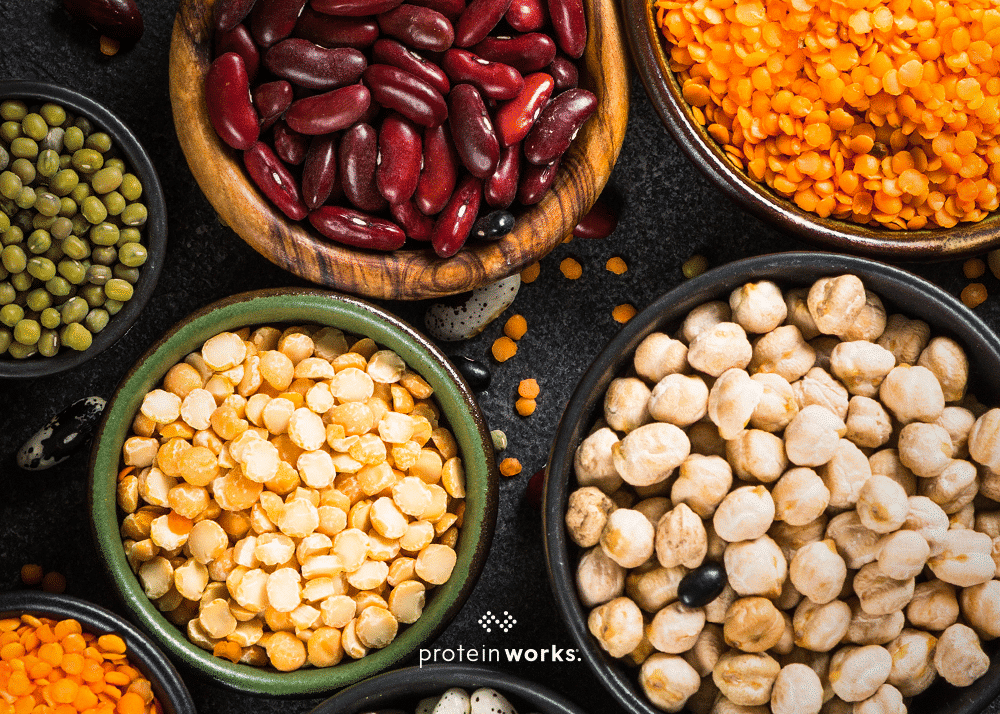
Legumes are some of the most useful foods to have around if you want to add some plant-based protein to your meals, alongside nutrients like fibre and iron. Honestly, come into my kitchen at any moment and you’ll find my cupboard stacked with tins of beans and chickpeas, my freezer housing a bag of edamame beans, and my fridge obnoxiously organised with boxes of tofu and tempeh.
And in true dietitian-fashion, it seems my enthusiasm is science-backed. A recent paper from the University of Cambridge assessed 20 protein sources across a combination of nutrition, affordability and environmental measures, and found the legume-based food, tofu, came out on top, with beans and lentils also ranking highly (1). While this doesn’t automatically crown tofu ‘The World’s Best Food’, I do think it nicely illustrates that perhaps there’s more to consider than simply the number of grams printed on the packet when thinking about protein sources.
-
Kiwis
You know a food has earned permanent residency in your kitchen when your supermarket places it in a special category for your online shop. For me, that food is kiwi.
And rightly so! Kiwis are a useful source of vitamin C, and vitamin C can help increase the absorption of iron when eaten as part of the same meal. They also provide fibre and have attracted quite a bit of attention for their potential effects on bowel function (2). In fact, the latest British Dietetic Association guidelines for managing chronic constipation in adults recommend 2–3 kiwifruit daily for at least four weeks as an evidence-based option (3).
I personally pair mine with breakfast or eat as a snack later during the day. And call me crazy, but I keep the skins on too. Just give it a good wash first.
-
Wholegrain sourdough bread
While some corners of the internet like to give bread some bad press, wholegrain bread can make a useful contribution to your intake of fibre, protein and a range of vitamins and minerals, and it’s certainly not something I think needs to be feared as part of a balanced diet (4).
Include sourdough fermentation on top of this, and whole other interesting nutritional layer is added.
You see, many grains naturally contain phytate, a compound that can bind minerals such as iron and zinc and potentially reduce their absorption. Fermentation can break down some of this phytate, which may improve the bioavailability of some minerals. For example, a 2026 systematic review of human intervention studies found that sourdough fermentation can increase measures of non-haem iron bioavailability in some short-term studies (5). Longer-term evidence, however, was inconsistent, so we still need a little more evidence before we can say whether sourdough fermentation itself improves iron status over time.
-
Peanut butter
I first tried peanut butter when I was around 17 years old (cry for my childhood self who missed out for so long), and since then, I have slowly found ways to incorporate it into almost every meal – from oats to pasta sauces and salad dressings.
Luckily for me, peanuts bring plenty to the table nutritionally. They provide protein, fibre and predominantly unsaturated fat, as well as nutrients like vitamin E (4,6). And while peanut butter is energy dense due to being primarily a fat source, this doesn’t mean we need to fear it! We just need to be mindful of portion sizes. Fat supports the absorption of fat-soluble vitamins, and including sources of unsaturated fat is encouraged within healthy eating patterns (7).
Also, a little genuine shout-out to the Protein Works team, if I may. After years of trying peanut butters, none have managed to compete with the taste of their smooth roasted peanut butter. Honestly, check my order history and you’ll a suspicious number of 1kg tubs being ordered on repeat.
-
Unsweetened soya milk
Moving the tour from my cupboards to my fridge, last on my list is soya milk. Specifically, an unsweetened version. Ideally fortified with calcium, iodine, riboflavin, vitamin D and B12.
The reason being is because soya milk has a similar protein content to cow’s milks. Fortified varieties contain important micronutrients that can be particularly useful for people following plant-based diets (8).
Unfortunately, most plant-based drinks would be classified as an ultra-processed food (UPF) under the NOVA system. But the label ‘UPF’ covers an extremely broad category of foods, and not every food in that category will carry the same health implications (9). For example, in a large European cohort study, higher consumption of ultra-processed foods overall was associated with a greater risk of developing multiple chronic diseases, but when split into sub-groups, this risk wasn’t seen for plant-based alternatives. Instead, higher intakes of animal-based ultra-processed foods and sugar- and artificially sweetened drinks were associated with increased risk (10).
A recent review similarly highlights the nutritional and health differences between ultra-processed plant-based foods and other UPFs, with evidence suggesting that soya milk can have favourable cardiometabolic effects compared with cow’s milk (11).
Part of being a dietitian is looking at the bigger picture and considering what a food provides, how it fits into the overall diet, and whether it helps someone eat in a way that is sustainable and enjoyable. As such, I try not to judge a food solely by the processing category it happens to fall into.
Before you leave my kitchen…
Remember there’s no single ‘perfect’ kitchen, and certainly no requirement to eat the same foods I do. My kitchen is simply stocked with foods that I know I’ll actually eat and enjoy. The foods that help the healthy choice feel like the easy choice, most of the time.
If the foods in your kitchen help you do the same, well, I’d call that a pretty good kitchen.


Disclaimer
The information contained in this article is based on available scientific evidence and is intended solely for general educational and informational purposes for the adult public. The content reflects general principles within nutritional science and should not be used as individual medical advice. Any product links or promotions do not constitute endorsements from me as a registered dietitian. Readers should consult an appropriate healthcare professional before making significant dietary changes. Particularly if they have an underlying medical condition or take prescribed medication.
References:
- https://doi.org/10.3389/fsufs.2026.1677796
- https://pmc.ncbi.nlm.nih.gov/articles/PMC6267416/
- https://doi.org/10.1111/jhn.70133
- https://assets.publishing.service.gov.uk/media/60538b91e90e07527df82ae4/McCance_Widdowsons_Composition_of_Foods_Integrated_Dataset_2021..xlsx
- https://doi.org/10.3389/fnut.2026.1778997
- https://www.sciencedirect.com/science/article/pii/S2213453019301004
- https://www.nhs.uk/live-well/eat-well/food-types/different-fats-nutrition/\
- https://www.gov.uk/government/publications/plant-based-drinks-health-benefits-and-risks/sacn-and-cot-assessment-of-the-health-benefits-and-risks-of-consuming-plant-based-drinks-summary?utm_source=chatgpt.com
- https://www.gov.uk/government/publications/processed-foods-and-health-sacns-rapid-evidence-update/processed-foods-and-health-sacns-rapid-evidence-update-summary
- https://pmc.ncbi.nlm.nih.gov/articles/PMC10730313/
- https://pmc.ncbi.nlm.nih.gov/articles/PMC12549432/

No Comments yet!